Diamond Powder in Optical and LED Manufacturing — Precision Polishing for the Next Generation
Diamond powder enables sub-nanometer surface finishing for optical lenses and LED substrates, ensuring light precision and device efficiency. This article explores its role in shaping the future of photonics.
10/22/20252 min read

Why Diamond Powder Matters in Photonics
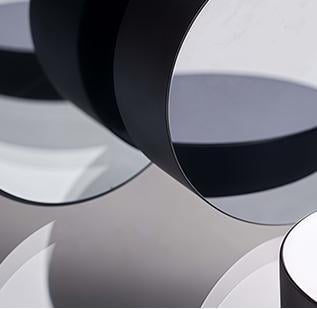
In the optical and LED industries, surface precision defines performance. Any imperfection—no matter how small—can scatter light, distort focus, or reduce luminous efficiency. Diamond powder, with its extreme hardness and sharp micro-cutting edges, delivers atomic-level flatness and clarity that traditional abrasives like alumina or cerium oxide cannot achieve.
Typical applications include:
Optical lenses and prisms (glass, quartz, sapphire)
LED substrates (GaN, SiC, and sapphire wafers)
Optical fiber connectors and filters
Its use ensures superior surface accuracy (Ra < 1 nm) and scratch-free finishes, crucial for high-brightness and low-loss optical devices.
Polishing Mechanisms and Material Compatibility
Unlike chemical abrasives, diamond removes material purely mechanically, slicing at the atomic scale without altering surface chemistry. This makes it ideal for hard and brittle substrates such as sapphire or gallium nitride, where thermal or chemical damage is unacceptable.
Depending on the substrate, polishing formulations vary:
Oil-based diamond slurries for high-hardness crystals (sapphire, quartz)
Water-based diamond suspensions for heat-sensitive LED wafers
Resin-bonded diamond pads for controlled removal in automated systems
The key advantage lies in maintaining flatness and transparency while minimizing subsurface damage—vital for optical transmission and LED light extraction.
Surface Finishing Performance and Industry Standards
Diamond powders ranging from 0.1 µm to 3 µm are commonly used in precision optical finishing. Under optimized conditions, they achieve:
Surface flatness below λ/10 (visible light wavelength)
Scratch-free polishing verified by interferometric inspection
Extended tool life compared to alumina-based abrasives
In LED wafer processing, diamond enables defect-free mirror surfaces, reducing light scattering and improving luminous intensity by up to 15–25% compared with conventional abrasives.
Market Trends and Sustainability
The demand for ultra-smooth surfaces is expanding rapidly in laser optics, AR/VR devices, and micro-LED displays. Manufacturers are shifting toward nano diamond suspensions for more uniform polishing and easier recovery.
Additionally, recyclable and low-odor diamond slurries are being developed to meet environmental and cleanroom safety standards—an emerging direction in green photonics manufacturing.
Conclusion
Diamond powder remains the cornerstone of precision optical fabrication. As photonics and LED technologies evolve toward higher density and smaller wavelengths, nano diamond abrasives will continue to define the surface accuracy and optical performance of next-generation devices.
Get in touch for inquiries about diamond powders and expert guidance.