How Diamond Powder is Manufactured — The Process Behind the Perfection
Diamond powder is created through a series of high-precision processes that transform carbon into the hardest and most efficient abrasive. From synthesis to purification, every step defines the final polishing quality.
10/20/20252 min read
From Carbon to Diamond: The Foundation of Synthesis
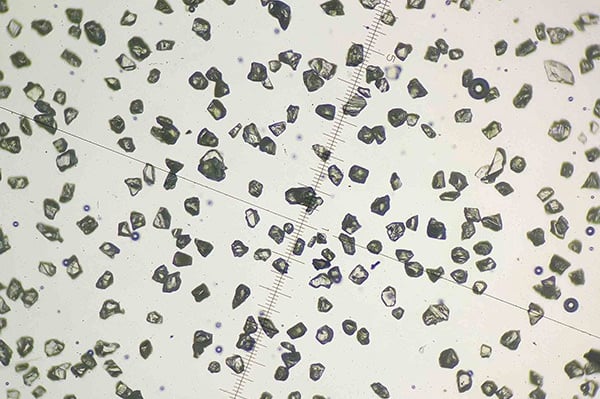
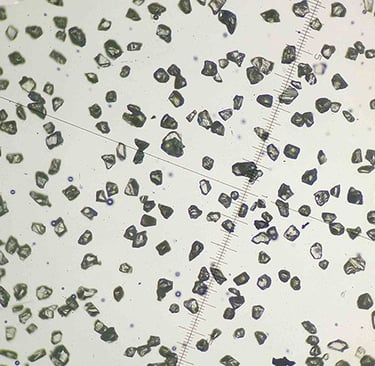
The manufacturing of diamond powder begins with selecting the right carbon source, typically high-purity graphite. Using High Pressure High Temperature (HPHT) or Chemical Vapor Deposition (CVD) methods, carbon atoms are rearranged into a diamond lattice structure.
HPHT is ideal for producing bulk diamond crystals under 5–6 GPa and temperatures above 1500°C.
CVD, in contrast, uses a plasma chamber where carbon gases deposit atom by atom, forming ultra-pure diamond films or microcrystals.
Both methods allow precise control over crystal size, morphology, and purity—critical parameters for achieving uniform abrasive performance.
Crushing and Particle Size Control
After synthesis, diamond crystals are crushed using ball mills or jet mills to create fine particles ranging from a few micrometers down to tens of nanometers. Advanced grading technologies like air classification, ultrasonic sieving, and centrifugal sorting ensure narrow particle size distribution.
The consistency of grain size directly affects polishing performance. A uniform particle size allows even material removal and prevents surface scratches—essential in semiconductor and optical finishing applications.
Purification and Surface Treatment
Raw diamond powder may contain metallic residues or non-diamond carbon. To achieve high purity, chemical processes such as acid leaching or alkaline washing are applied. Some manufacturers also use plasma cleaning to modify the surface and enhance dispersibility in slurries.
Purified diamond powder exhibits better suspension stability in water- or oil-based systems and maintains cutting edges longer during high-load polishing.
Quality Testing and Applications
Each batch of diamond powder undergoes laser particle analysis, SEM imaging, and hardness testing to ensure consistent quality. Depending on the particle size and morphology, diamond powders are classified into:
Micron-grade powders for traditional polishing and lapping
Submicron and nano powders for CMP (Chemical Mechanical Polishing) and semiconductor wafers
Coated diamond powders for resin or metal bond tools
These materials are widely used in optics, semiconductors, precision ceramics, and cutting tool industries, where atomic-level surface smoothness and mechanical stability are required.
Conclusion
Behind every high-gloss mirror surface or flawless wafer lies the precision of diamond powder manufacturing. By mastering synthesis, purification, and grading, producers deliver materials that meet the demanding standards of next-generation technology.
Get in touch for inquiries about diamond powders and expert guidance.